Why term-based yoga works better than drop-in for most students
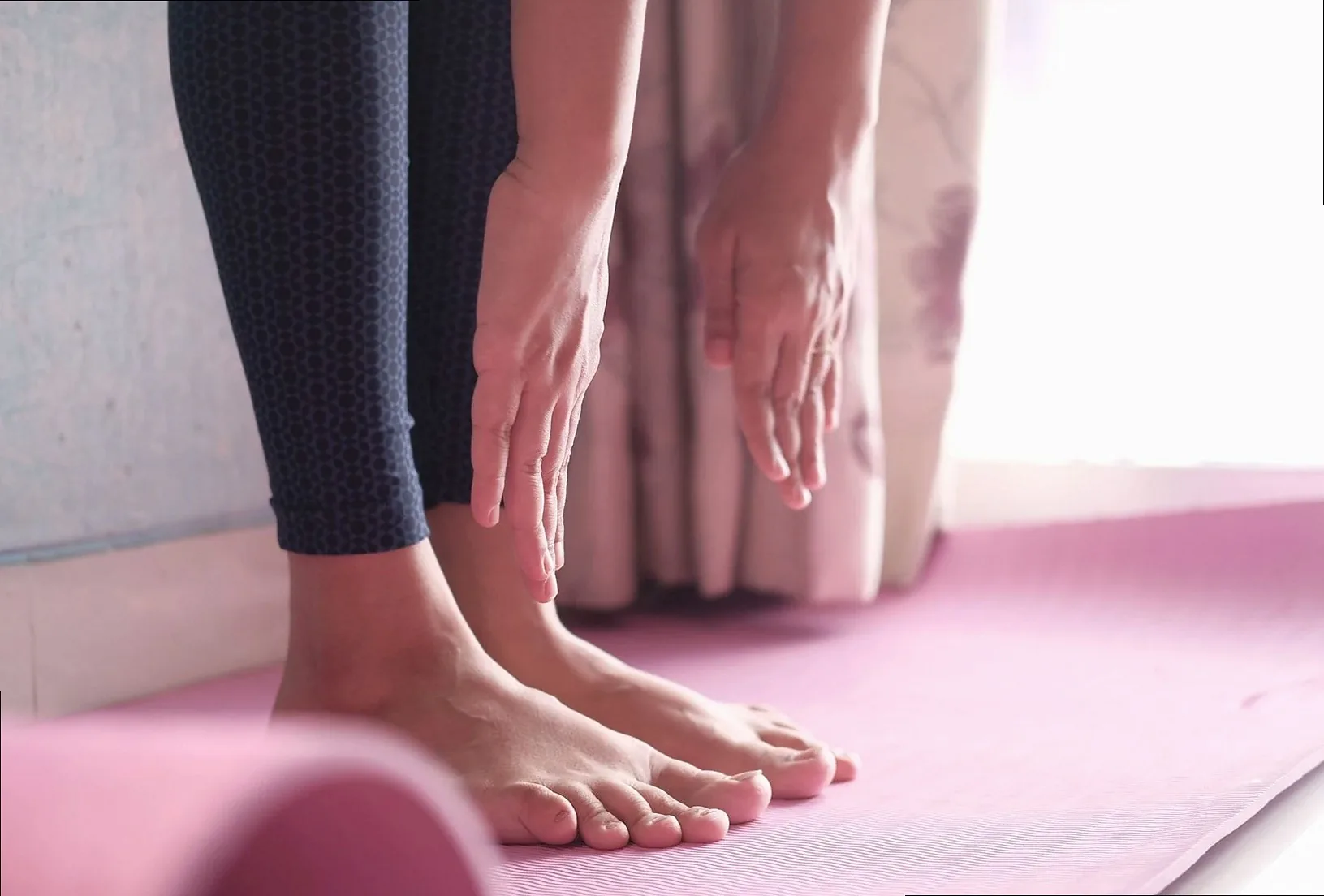
Picture a Tuesday evening class in early autumn. The teacher calls out Warrior II, and half the room has never heard the Sanskrit name, a quarter are on their third term and are quietly adjusting their back foot, and one person in the corner is trying to remember whether they came last week or the week before that. The teacher has to make a choice: go back to basics and lose the returning students, or push forward and lose the newcomers. Neither option is really good teaching. This tension is the central problem with drop-in yoga, and I think about it more than I probably should. I've been practicing and teaching for long enough to notice that the students who grow most consistently are almost never the ones who drift in and out — they're the ones who sign up for a full term and actually show up. That's not a sales pitch for our studio (I promise), it's just something I keep observing, and I want to think through why it happens.
the problem drop-in classes were never designed to solve
Drop-in yoga made a lot of sense when yoga was still finding its footing in mainstream culture. It lowered the barrier to entry, let curious people test the water, and gave studios a way to fill mats on slow evenings. I get it, and I'm not arguing that drop-in has no place at all. But somewhere along the way it became the default format rather than the introductory one, and that shift has real costs for students who actually want to improve.
When every class has to function as a standalone unit — legible to a complete beginner and still worth attending for someone on their fifteenth visit — the teacher is forced to compress everything. Warm-up, a handful of standing poses, maybe a brief backbend or twist, savasana. Forty-five minutes to an hour of competent, safe, broadly accessible movement. The problem is that 'broadly accessible' and 'progressively challenging' are not the same thing, and after a few months of drop-in many students hit a plateau they can't quite name. They feel like they're doing yoga but not quite going anywhere with it.
what 'progressive sequencing' actually means in practice
I want to be specific here because 'progressive' gets used loosely. In a structured eight-week term, progression means that week one's work is load-bearing for week two's, the way a foundation supports a wall. In our autumn term at Cosmic Oasis, for instance, weeks one and two are entirely about hip-flexor length and basic spinal articulation. We do a lot of Sphinx, a lot of low lunge variations, some careful cat-cow work. It might feel modest. Students sometimes tell me afterwards that they expected more intensity.
By week four, when we start working toward Warrior I properly — not just the shape of it but the internal logic of it, the way the back hip has to revolve forward and the front knee has to track over the second toe — those two weeks of hip-flexor work mean students can actually feel what I'm describing. The adjustment isn't something I have to push onto their body from the outside. It's something they can find themselves because the groundwork is already there. That's the difference. In a drop-in context I'd be cueing Warrior I to bodies that might not have the hip-flexor length to receive the instruction, which means I'm either overcueing or giving up and just letting people do a rough approximation of the pose.
Weeks five and six introduce longer holds and the beginning of some mild inversion work (legs-up-the-wall, supported bridge, eventually three-legged downward dog). Week seven brings those threads together into a longer, more continuous flow. Week eight is consolidation — revisiting poses from week one and letting students feel, concretely, what has changed. That arc is only possible if the same group of bodies shows up across all eight weeks.
the nervous system argument (which I find more convincing than the flexibility one)
Most people assume yoga progress is about flexibility, and flexibility does improve — but I think the more important change is neurological. Learning a motor pattern takes repetition across multiple sessions with adequate rest between them. The research on motor learning (I've been reading into this loosely, mostly through physiotherapy literature rather than any formal study) suggests that skills consolidate during rest, not during practice. You practice, you sleep, and something solidifies. Then you practice again from a slightly more integrated baseline.
Drop-in breaks that cycle arbitrarily. If someone attends week one of a hypothetical progression, then misses two weeks, then returns for week four, their nervous system hasn't had the intermediate sessions to build on. They're not at week four; they're essentially at week one with some mild fatigue. A committed term keeps the cycle intact. I'm still working out exactly how to explain this to prospective students without sounding like I'm lecturing them about neuroscience they didn't ask for, but the practical upshot is simple: consistent attendance in a structured format produces noticeably faster improvement than the same total number of hours scattered across random drop-in visits.
The students who grow most aren't the most naturally flexible — they're the ones whose nervous systems get to consolidate the work week after week.
community as an underrated pedagogical tool
There's something else that happens across an eight-week term that's harder to quantify but genuinely important. Students start to know each other. They notice when someone is having a rough week. They remember that the person on the mat beside them was struggling with the same hip rotation they were working on last Tuesday. This is not incidental warmth — it has a practical effect on learning.
When people feel observed and known (in a safe way, not a pressured way), they tend to take more useful risks. They'll stay in a pose a breath longer. They'll try the variation they've been avoiding. They're less likely to quietly collapse out of a difficult moment because there's a small social fabric holding them there. In a drop-in class with a rotating cast, that fabric never fully forms. People are polite to each other but essentially anonymous. I've taught both formats enough to feel the difference in the room quite clearly — a term group has a specific quality of collective attention that a drop-in group rarely achieves, especially before the forty-five minute mark.
the honest counterarguments (because they exist)
I want to be fair here. Terms have real downsides and I'd be doing you a disservice to skip them. The upfront commitment — financial and temporal — is a genuine barrier. Life in a city like ours doesn't always allow for eight consecutive Tuesday evenings. Shift work, young children, unpredictable schedules: these are real constraints, not excuses, and a term format can exclude people who would genuinely benefit from yoga but can't guarantee their availability.
There's also the question of skill-matching. A structured term works best when students are roughly at a similar level. If the cohort is too mixed, the teacher faces a version of the same drop-in problem inside the term format. We've tried to address this at Cosmic Oasis by being fairly explicit about what each term assumes — our foundations term genuinely starts from zero, our intermediate term genuinely assumes you know your way around a sun salutation — but I'll admit we don't always get the groupings perfect.
And yes, drop-in has an obvious and legitimate use as a maintenance format for experienced practitioners who already have a strong baseline. If you've been practicing for five or six years and you just want a good hour of movement on a Wednesday, drop-in is probably fine. The argument I'm making is specifically for students who are still actively developing their practice, which is most people in most studios most of the time.
a practical recap if you're deciding which format to try
If you're weighing up a structured term against the flexibility of drop-in, the decision mostly comes down to where you are in your practice and what you're actually trying to get out of it. For most people who are still learning — which, honestly, includes practitioners with several years of experience who've just been doing the same things repeatedly — a term is going to produce more tangible progress for the same hours invested. The sequencing does work that random attendance can't replicate.
- If you're brand new: start with a foundations term, not drop-in. The vocabulary alone takes two or three sessions to absorb, and you need continuity to build on it.
- If you've been doing drop-in for a while and feel stuck: one structured eight-week term will likely show you more change than six more months of occasional drop-in.
- If your schedule is genuinely unpredictable: ask the studio whether they allow one or two make-up sessions within a term. Many do. Missing week three isn't catastrophic if you attend everything else.
- Check what the term actually covers before signing up. A good studio will tell you explicitly what poses and concepts are in scope, not just the general style.
- Plan for week one to feel easier than you expected. That's intentional — the foundation work pays off later, not immediately.
I'm still refining how we structure our own terms at Cosmic Oasis and I don't think we've arrived at the perfect format — the week-by-week balance between consolidation and novelty is something I adjust almost every cycle. But the core argument here, that committed progressive sequences produce qualitatively different results than drop-in, feels pretty solid to me after years of watching both. If you try a full term and find I'm wrong, I'd genuinely like to hear about it.