How to set up a home practice that actually complements your studio classes
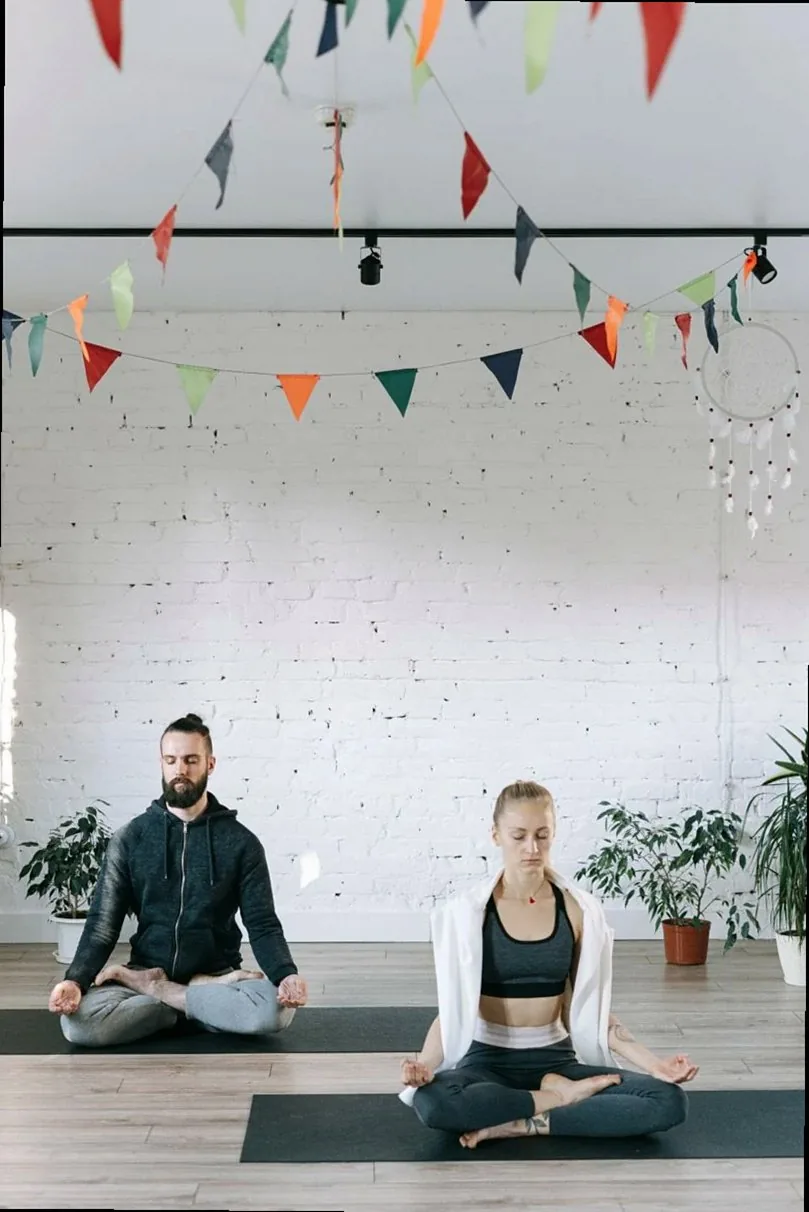
Last Tuesday I rolled out a mat in my living room at 7am and just stood there for a full minute, completely blank, before eventually doing three sun salutations and calling it done. That counts. I think one of the quietest myths in yoga culture is that your home practice has to be a fully-formed, hour-long thing to be worth anything at all — and that myth has stopped me (and a lot of people I talk to after class) from even starting. What I've learned, slowly and with a lot of false starts, is that the most useful home practice is one that's almost embarrassingly small at first, and that borrows directly from what's already happening in your studio sessions. This is my attempt to write down what's actually worked, with the caveat that I'm still refining it myself.
start with what your teacher already gave you
The single most useful shift for me was stopping trying to design a home practice from scratch. I used to open YouTube, scroll through 40-minute sequences from teachers I'd never met, and feel vaguely guilty that none of them felt right. Then I started doing something much simpler: after each studio class, I'd write down one or two things we worked on — a particular hip opener, a transition I kept stumbling through, a breath cue that finally made something click. That note (I keep it in a plain text file, nothing fancy) became the seed of the next morning's home session.
If you're attending classes at the studio regularly, you already have a curriculum. Your teacher is tracking themes across weeks — maybe you're in a period focused on backbends, or on grounding the feet in standing poses. Fifteen minutes at home revisiting just those elements is genuinely more valuable than doing a generic sequence that has nothing to do with where your body is right now. I'd even say: ask your teacher after class. Most teachers are delighted when students ask 'what's one thing I could do at home this week that would help with what we're working on?' It usually leads to a very specific, very useful answer.
the actual logistics (space, time, what you need)
I practice in a room that is roughly 2.5 by 3 metres when I push the coffee table aside. That's enough for a full mat plus a little breathing room on each side — honestly more than sufficient for everything except wide-legged standing poses, which I just adapt slightly. If your apartment is small (and a lot of urban apartments in this country are), you don't need a dedicated yoga room. You need a mat's worth of floor and a wall within reach for balance support.
On equipment: I use a mat, one block, and a folded blanket. That's it. I know people accumulate bolsters and straps and wheels, and those are genuinely useful in a studio context where storage exists, but at home they mostly become things that live in the corner and make you feel like you're not doing it properly when you skip them. A rolled-up towel works as a strap. A thick book works as a block in a pinch. Start with almost nothing and add only if you feel a real gap.
Timing matters more than duration. I've found 15 to 20 minutes in the morning — before I open my laptop or look at my phone — is far more consistent than longer sessions I schedule for the evening. Evening sessions kept getting bumped by dinner running late or just the accumulated tiredness of a workday. Morning sessions, even very short ones, have a lower activation threshold. If 15 minutes feels like too much of a commitment to start, try 8 minutes for a week. Genuinely.
- a non-slip mat on a surface that won't slide (wooden floors sometimes need a rug underneath)
- one block or a firm folded blanket as a substitute
- a timer on your phone so you stop watching the clock
- a small notebook or text file to jot one observation after each session
- access to natural light if possible — it changes the quality of the practice noticeably
keeping it honest when motivation dips
There will be stretches of a week or two where you don't practice at home at all, and that's just what happens. I've had months where the only yoga I did was in the studio, and looking back, that was still enormously useful — the consistency of showing up to class was doing real work even without the home component. The home practice is supplementary, not obligatory. Treating it as a moral issue (I should be practicing every day, I'm undisciplined) tends to make it collapse entirely.
What has helped me sustain it over longer periods is keeping the session length variable rather than fixed. Some mornings I do a focused 20 minutes with a clear intention — maybe working through the same standing sequence we did in class on Monday, paying attention to the foot placement my teacher mentioned. Other mornings I do five minutes of breathwork and one long held pose. Both are legitimate. The practice doesn't need to look the same every day to be building something.
I'm also still working out how to handle the weeks around public holidays and seasonal shifts — here, the change between the humid months and the dry cool season affects my body quite a bit, and what I want to do on the mat changes accordingly. I haven't solved this elegantly yet, but I've started noting the season and the weather alongside my practice notes, and I'm beginning to see patterns. It's slow, ongoing work.
The home practice doesn't need to be impressive — it just needs to keep the conversation with your body going between studio sessions.
The next studio class I'm attending is this Saturday morning. I'll take one note afterward, probably about the shoulder work we've been circling for the past few weeks, and that note will become Sunday's 15 minutes. That's the whole system, more or less. It's mid-season right now and the mornings are cool enough to practice near an open window, which makes showing up considerably easier.