What Iyengar alignment principles actually mean for a vinyasa practice
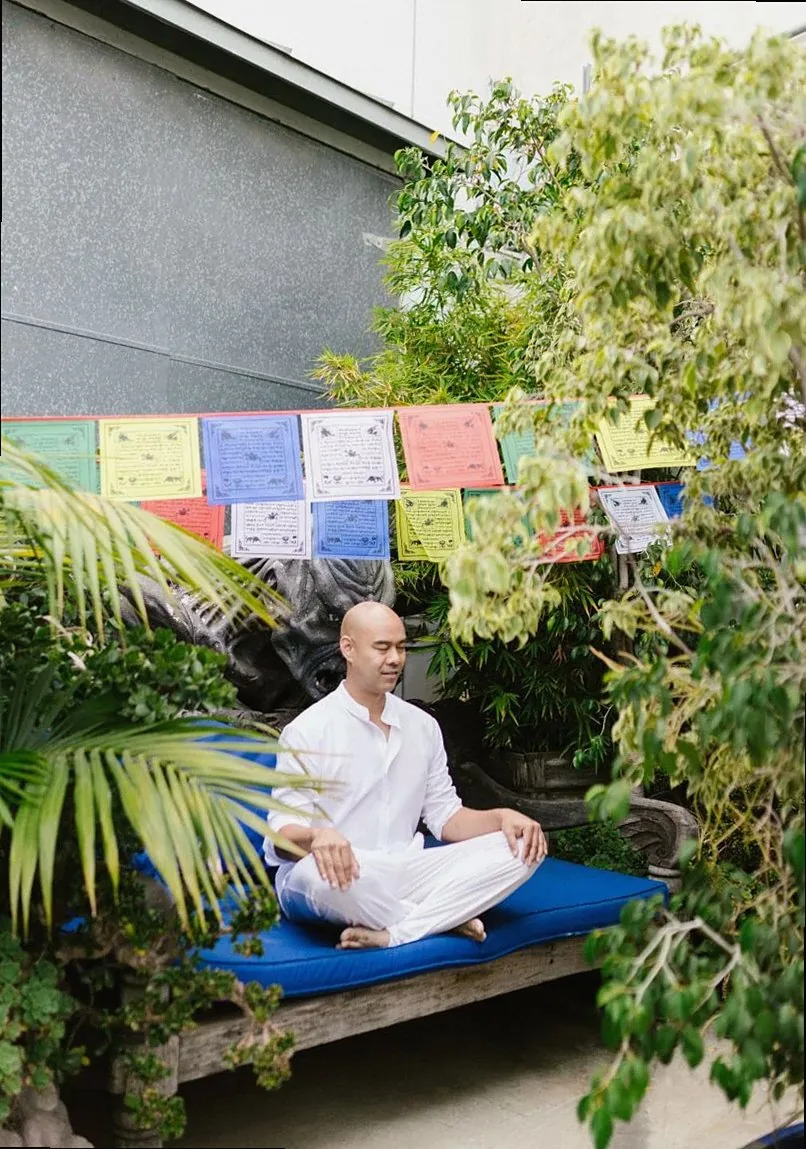
I was mid-sequence last autumn, cueing a standing lunge to a room of maybe twelve people, when I stopped and said something I hadn't planned: "press the back heel down like you're trying to leave a footprint in the floor." I'd been reading Light on Yoga again that week, slowly, with a pencil. The cue landed differently than anything I'd said that month — three students visibly lengthened through the side body, without me touching anyone. That moment made me want to write down what I think is actually happening when Iyengar-trained ideas bleed into a vinyasa container. I'm still working this out, and I suspect I will be for a while.
what 'alignment' means in the Iyengar sense (it's not just aesthetics)
B.K.S. Iyengar spent decades — literally decades — using props, mirrors, and extremely long holds to understand how skeletal position changes the quality of effort in a pose. The key word there is quality, not shape. When he talks about the femur rotating in Trikonasana, he's describing a chain reaction: the outer hip engages, the lumbar decompresses slightly, the thoracic spine has more room to open. The visual outcome (a 'nice' triangle pose) is almost incidental to him. The mechanical cascade is the point.
Vinyasa teaching, especially in the lineage most of us absorbed from Shiva Rea or the Jivamukti tradition, tends to prioritize rhythm and breath. That's genuinely valuable. But it can quietly deprioritize the specificity that makes a pose safe and instructive over years of practice. When I started looking at my own sequencing through an Iyengar lens, I noticed I was cueing transitions between poses without ever fully landing in them — we'd pass through Warrior II on the way somewhere else, and I realized I'd never once asked students to feel whether their front knee was tracking over the second toe, or whether the back foot was actually grounded through the outer edge.
three things I changed in my own sequencing (and what happened)
Practically speaking, incorporating Iyengar principles into a flow class doesn't mean slowing down to the point of stillness (though sometimes I do exactly that). It means building what I think of as 'alignment anchors' — one or two precise actions per pose that the student can check even at vinyasa pace. Here's what that looked like for me over about six months of experimenting.
The difference I noticed most quickly was in Chaturanga. I'd been cueing 'lower to ninety degrees' forever, which is technically accurate but doesn't actually help anyone. Iyengar's approach to Chaturanga emphasizes the shoulder heads drawing back and down, and the elbows tracking close to the ribcage — these are specific muscular events, not geometric targets. When I switched my language to those two actions, students stopped collapsing into the pose and started feeling it as the strength exercise it actually is. One regular student told me (unprompted) that her wrists had stopped hurting after three weeks. I can't prove causation, but I have a theory.
- In Warrior I: cue the back hip pressing forward actively, not just the front knee bending — the pelvis orientation changes the whole lumbar experience.
- In Downward Dog: ask for 'index finger roots pressing evenly' rather than 'spread your fingers' — specificity of which part of the hand gives people something to actually check.
- In Chaturanga: 'shoulder heads back and down, elbows to ribs' instead of '90 degrees' — mechanical action over geometric target.
- In Trikonasana: pause the flow, hold for six breaths, then come out — even once per class, the longer hold teaches the body something the transition never can.
- Before any backbend: one preparatory action (like manually firming the outer thighs) held for two breaths — creates muscular recruitment that carries into the pose itself.
the tension that doesn't resolve (and I'm not sure it should)
There's a real philosophical friction here that I keep sitting with. The Iyengar tradition, at its most rigorous, is about building a relationship with stillness — with duration long enough to receive information from the body. Vinyasa, at its best, is about continuity of awareness across movement, the idea that the breath stitches moments together into something cohesive. When I try to introduce Iyengar-level precision into a flowing class, I'm asking students to process a lot of specific information quickly. Sometimes that works beautifully. Sometimes it fragments the very flow I'm trying to honor.
I've noticed that the students who benefit most from precision cues in flow are the ones who've already spent some time in a slower or more alignment-focused class — they have a reference library for the sensations I'm pointing at. A student who's only ever done dynamic vinyasa has no stored feeling for what 'outer hip engaging in external rotation' means; the cue floats past. This makes me wonder whether the real answer is sequencing across a longer arc of time: a slower, more Iyengar-influenced class once a week alongside two flow classes, rather than trying to fold everything into a single session.
I don't have a clean resolution to this. The studios I respect most in this city seem to be moving toward mixed-format offerings — some pure flow, some alignment-focused slow work, the occasional workshop that sits deliberately in between. Maybe the container matters as much as the content. Or maybe the right teacher can make precision feel like flow, and I'm just not skilled enough yet to pull it off consistently. That's the question I'm still inside.
I keep thinking that precision and flow might not be opposites — they might just need different containers, and I haven't found the right one yet.
If you've been practicing for a while, I'd ask you to sit with this: does adding more specificity to a flowing practice deepen it, or does it interrupt something that only works because it isn't analyzed? I think the answer is different for each body in the room, and possibly different for the same body on different days. That's not a satisfying conclusion, but it might be the honest one.